

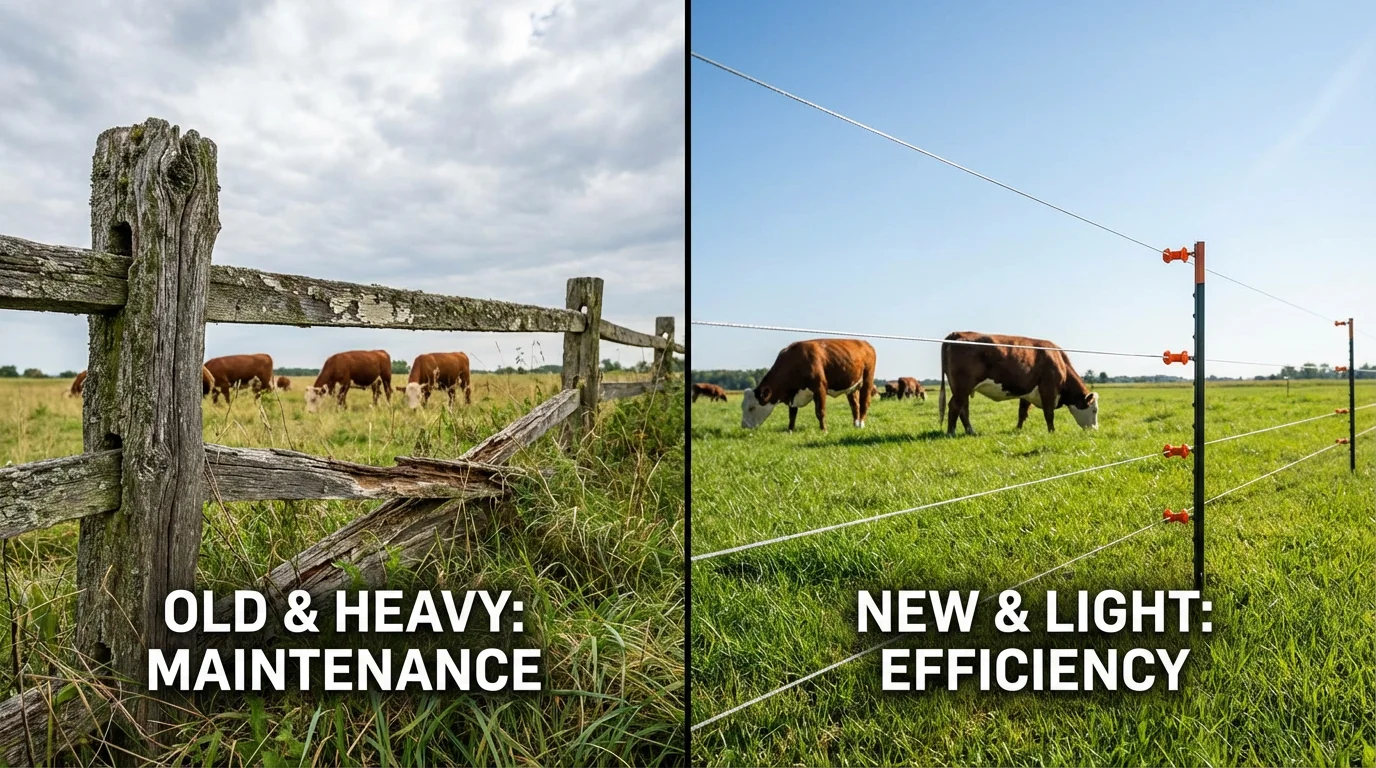
Electric Fence vs. Traditional Fencing: Which is Better for Your Farm?
"Stop building barriers and start managing perimeters."
Choosing the right fencing is one of the most expensive and permanent decisions a farmer can make. Traditionally, the choice was simple: heavy wooden posts and rails or labor-intensive barbed wire. However, as ranching technology evolves, electric fencing has emerged as the superior choice for modern land management.
If you are debating between sticking with "the way we've always done it" or making the switch to electric, this comparison breaks down the four key factors every farm owner should consider.
1. Cost: Upfront and Long-Term
In almost every scenario, electric fencing is significantly more affordable than traditional wood or wire fencing.
| Feature | Traditional (Wood/Wire) | Electric Fencing |
|---|---|---|
| Material Cost | High (heavy posts, rails, mesh) | Low (thin wire, polywire, insulators) |
| Installation Labor | High (digging, post-driving, heavy lifting) | Minimal (lightweight posts, no digging) |
| Total Cost per Mile | $3,000 - $8,000+ | $500 - $1,500 |
By switching to electric, you aren't just saving on wire; you are saving on the massive infrastructure required to hold heavy materials in place.
2. Installation Time and Labor
Installing a traditional fence is a multi-week project. It requires heavy equipment, hole-digging, and often a team of several people.
Electric fences are designed for speed. Because the barrier is psychological (the animal respects the shock) rather than physical, the wires can be thin and the posts can be light. A single person can often fence a 10-acre pasture in a single afternoon using an integrated energizer and polywire.
3. Maintenance and Durability
Traditional wood fences rot. Barbed wire sags. Both are damaged by animals leaning, rubbing, and pushing against them. Over ten years, the cost of replacing posts and re-stretching wire often equals the original cost of the fence.
Electric fences last longer because animals never touch them.
- No leaning or rubbing means no structural stress on posts.
- High-quality ABS energizers like the A605 Series are IP55 waterproof and built for decades of outdoor exposure.
- The only maintenance required is clearing vegetation and checking the voltage on your LCD screen.
4. Animal Safety: Psychological vs. Physical
Barbed wire causes thousands of hide infections and lacerations every year. Wood fences can splinter and cause injury if an animal breaks through.
Electric fencing is the safest containment method available. The 0.3ms pulse is designed to be startling, not harmful. Animals learn to stay a few feet away from the perimeter entirely. There is no risk of entanglement, skin damage, or infection. It is a humane solution that respects the animal's natural instinct to avoid pain.
Summary: The Clear Winner
If you need a permanent, immovable barrier for high-stress areas like loading chutes, stick with wood or heavy steel.
But for pasture management, predator protection, and perimeter control, electric fencing is the faster, cheaper, and safer choice for the 2026 farmer.
Ready to make the switch?
Browse Our Complete Energizer LineLIFEALL — Modern Fencing Solutions for Modern Ranches.