

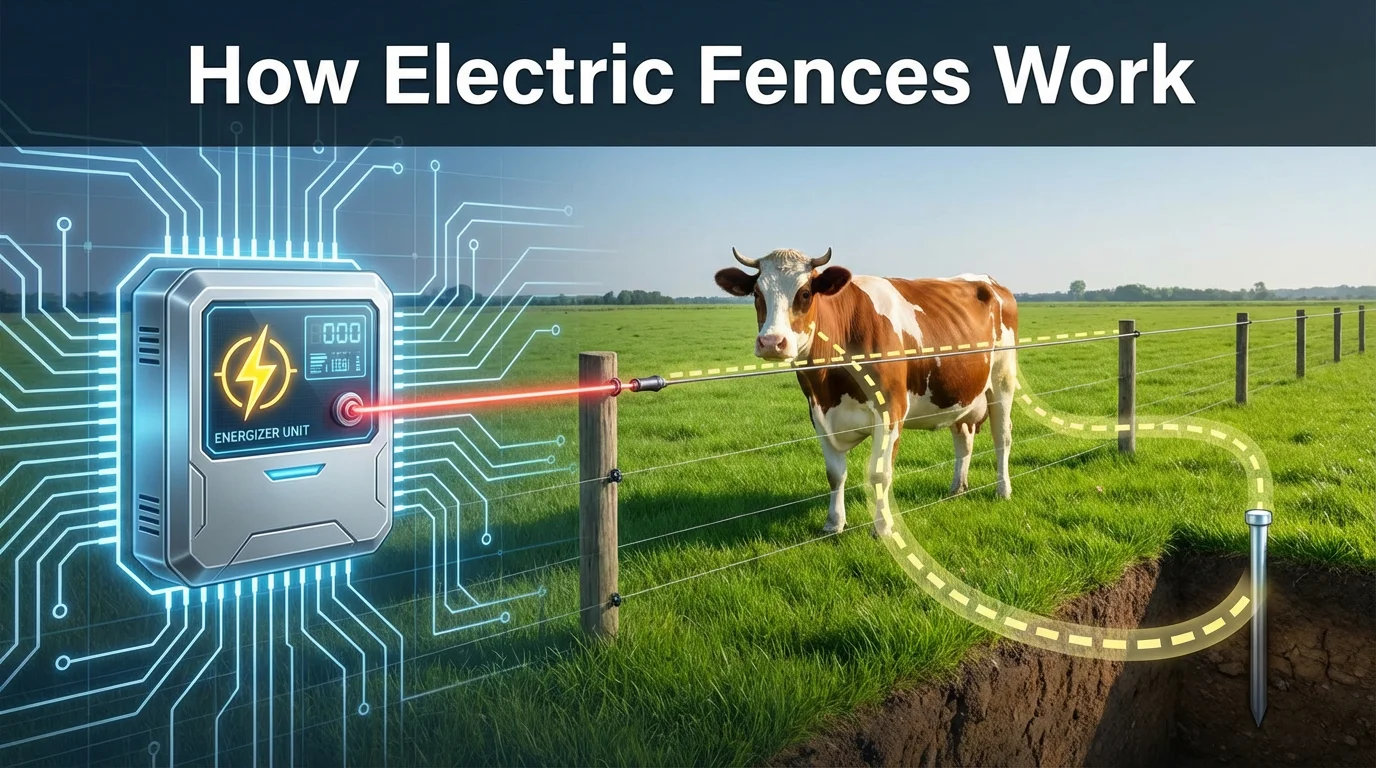
The Science of Safety: How Electric Fences Work and Where to Use Them
Electric fencing, often called an "Electric Shepherd," is one of the most misunderstood yet effective tools on a modern farm. To the uninitiated, it looks like a simple wire. To a farmer, it's a dynamic management system. But how exactly does a thin wire stop a 1,500-pound bull? And where can you use it beyond just keeping cows in a field?
In this guide, we’ll strip away the mystery and explain the physics behind the pulse and the best scenarios for deployment.
Part 1: The Physics of the Pulse — How It Works
The "magic" of an electric fence isn't in the wire itself, but in the complete electrical circuit. Think of the system as an open loop that only closes when something touches it.
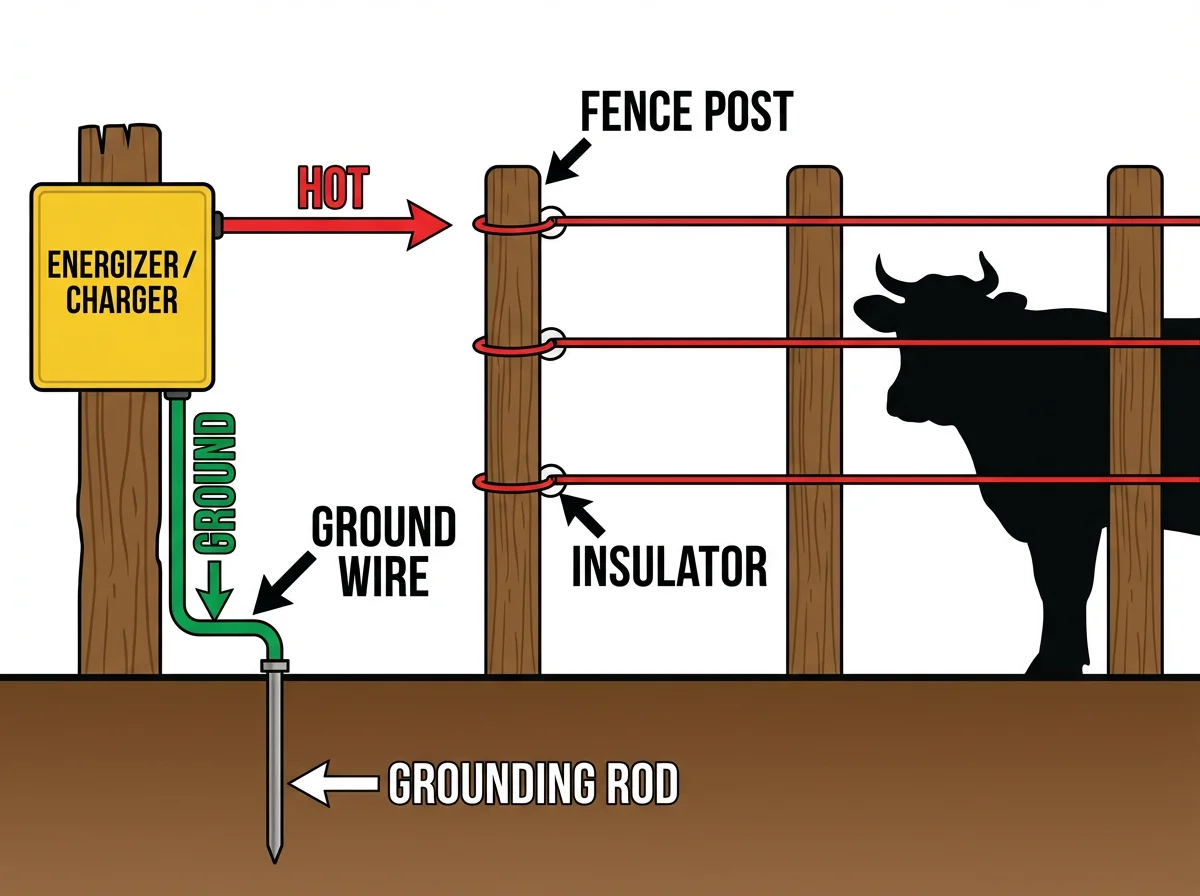
The Four Components of the Circuit:
- The Energizer (Charger): This is the heart of the system. It takes power (from a battery, solar panel, or wall outlet) and converts it into a high-voltage, low-amperage pulse.
- The Fence Wire: The "highway" for the electricity. It carries the pulse along the perimeter but is kept away from the ground by insulators.
- The Animal: When an animal touches the wire, the electricity flows through its body toward the ground.
- The Grounding System: This is the most vital and often overlooked part. Metal rods driven into the earth catch the electricity as it leaves the animal’s feet and carry it back to the energizer, completing the loop.
Why is it Safe?
Unlike the constant current in your home's wall outlet, a fence energizer sends out short, sharp pulses (typically lasting only 0.003 seconds). This "on-off" cycle ensures the animal is startled and repelled but never "locked" onto the wire. It is a psychological barrier, not a physical one; the animal learns to fear the wire, so it stops trying to push through it.
Part 2: Real-World Usage Scenarios
While "keeping cows in" is the most common use, the flexibility of modern energizers allows for much more creative and productive farm management.
1. Managed Intensive Grazing (Rotational Grazing)
This is the "gold standard" of modern ranching. By using temporary electric fencing, you can divide a large pasture into 10 or 20 smaller "cells." Animals graze one cell intensely for a day or two and are then moved to the next.
- Benefit: This allows the grass in the previous cells to rest and regrow faster, increasing your land's carrying capacity by up to 30-50%.
2. Predator Exclusion (The "Keep Out" Zone)
Electric fences aren't just for keeping things in; they are excellent at keeping things out.
- Scenario: Protecting poultry from foxes, or beehives from bears.
- The Setup: Using 5-7 strands of wire starting very close to the ground ensures that even small digging predators or large climbing ones receive a deterrent shock before they reach your high-value assets.
3. Strip Grazing for Forage Crops
If you grow kale, turnips, or specialized forage for winter feeding, animals will naturally go in and trample the whole crop in a day.
- Scenario: Place a single movable electric wire across the crop, "stepping" it forward a few feet every morning.
- Benefit: Zero waste. The animals eat exactly what they need for the day and the rest of the crop stays fresh.
4. Waterway and Sensitive Area Protection
Protecting riverbanks from erosion and preventing livestock from fouling water sources is critical for environmental compliance and animal health.
- Scenario: Running a single wire along a creek or a newly planted tree line.
- Benefit: It provides a low-cost, low-maintenance way to keep animals in the "safe" grazing areas without blocking their view or the wind.
Part 3: Pro-Tips for Success
| Challenge | The Electric Solution |
|---|---|
| Animal Insulated by Wool? | Use a higher-joule energizer (like 2J+) and multiple wires to ensure contact with the nose or legs. |
| Extremely Dry Soil? | Use a "Hot-Ground" system where every second wire is connected directly back to the ground terminal. |
| Heavy Vegetation? | Check the "Fault" indicator on your LCD screen. Clean the line regularly to prevent power leakage. |
Conclusion: Control Your Land, Not Just Your Fence
Understanding the principle of the "loop" is the first step to becoming an expert in farm management. Whether you are keeping a family milk cow in the backyard or managing 500 acres of rotational pasture, the electric fence is your most cost-effective employee.
Ready to start your setup? Check out our A605 10KM LCD Energizer — the perfect balance of power and monitoring for the modern rancher.
LIFEALL Electric Fence — Built for farms. Trusted by ranchers.