 electric fence netting
Title: Can You Cut Electric Fence Netting? A Professional Guide from LIFEALL Experts
Introduction: A Common but High-Risk Question
"When in doubt, cut it out." This might work for some things, but when it comes to electric fence netting, it's perhaps the worst advice you could follow. A question we often encounter is: "Can I just cut the electric netting to make it fit my space?" This article provides a clear, professional explanation of why cutting is not advised and what you should do instead, drawing on over a decade of experience in the industry.
For projects where customization is needed, we recommend using LIFEALL Electric Fence Polywire 2mm – 200m/500m. Its key specifications include: 2mm polywire, high-visibility red & white, 200m/500m reels.
Understanding How Electric Netting Works: Why Cutting is a Critical Issue
To understand why cutting is problematic, you first need to understand the basic design. Unlike a single wire, the horizontal lines (conductors) in electric netting are typically interconnected in a continuous loop. This clever design allows the electrical pulse to travel efficiently throughout the entire section of netting. When you cut a horizontal strand, you break this loop. It's like cutting a string of Christmas lights; the entire circuit fails, and everything beyond the cut stops working.
The Three Major Risks of Cutting Electric Fence Netting
Based on this design, cutting the netting introduces several significant risks:
Circuit Failure Leading to Complete Ineffectiveness:
The immediate effect is a broken electrical circuit. Sections of the netting will no longer be electrified, rendering them useless as a deterrent.
Greatly Reduced Protective Effectiveness:
A non-electrified section creates a weak spot. Animals can learn to push through or escape from this exact point, compromising the security of your entire enclosure.
Compromised Structural Integrity:
The construction of the netting is a balanced system. Cutting it can cause the remaining mesh to unravel or become unstable, making it difficult to tension properly and creating a messy, ineffective barrier.
Professional Solutions: How to Handle Excess Netting (Without Cutting)
Thankfully, there are two highly effective and non-destructive methods to manage excess netting:
Method 1: Doubling Back
Simply fold the excess length back along the main run of the fence. This maintains the electrical continuity and keeps the netting intact and fully functional.
Method 2: Bundling with Extra Posts
Gather the excess netting, bundle it neatly, and secure it to one or two additional support posts. This keeps the bundle off the ground, preventing vegetation from causing shorts and maintaining a tidy appearance.
What If It's Already Cut? LIFEALL's Emergency Repair Solution
Mistakes happen. If your netting is accidentally cut (e.g., by a mower or trimmer), all is not lost. A professional repair is possible using a specific field repair kit. These kits typically include conductive twine and brass ferrules. The process involves carefully rejoining the severed conductive strands to re-establish the electrical path. The key is to ensure a secure, metal-to-metal connection to maintain conductivity and prevent power loss through arcing.
Conclusion: Planning Over Repair, Professionalism Adds Value
The decision to cut electric netting is almost always a permanent and detrimental one. The most effective strategy is careful planning before purchase to select the appropriate length for your needs. However, if you find yourself with excess netting, the fold-back or bundling methods are the industry-approved, professional solutions that preserve the integrity and functionality of your investment. At LIFEALL, our decade of international experience has shown that understanding the engineering behind your tools is the key to their long-term success.
Recommended Products
LIFEALL Electric Fence Polywire 2mm – 200m/500m: 2mm polywire, high-visibility red & white, 200m/500m reels.
LIFEALL Electric Fence Jumper Lead Cables: Red & green crocodile clips, connect energizer to fence & ground.
Read article
 Electric Fence Voltage
Electric Fence Voltage: How Many Volts Do You Need?
An electric fence only works if the animal that touches it gets a memorable shock — and that comes down to voltage. Too low, and livestock learn they can lean on the fence. Too high, and you risk injuring animals or people. Knowing the right numbers for your animals, and how to keep them there, is the difference between a fence that trains and a fence that fails.
Here is the practical guide to electric fence voltage: what the numbers mean, what your animals need, and why your fence reads low even when everything looks fine.
Volts, Amps, and Joules: The Basics
Voltage (V) — the "push" of the pulse. This is the number you read on a fence tester, and the number that matters most for shocking power.
Current (A) — the amount of electricity flowing. In electric fences it is deliberately tiny (milliamps) and pulsed, so the shock is painful but safe.
Joules (J) — the energy per pulse. This is the energizer spec that tells you how much "punch" the charger can deliver — higher joules means the fence can overcome weeds and long lines.
Simple rule: voltage tells you if the shock is strong enough; joules tell you if the energizer is big enough. A fence can show full voltage at the charger but deliver almost nothing to the animal if the pulse is weak under load.
Recommended Voltage by Animal
These are the commonly recommended minimum voltage ranges measured at the farthest point of the fence line, under load. Fence at the lower end for tame animals, higher end for stubborn or woolly ones.
Animal
Recommended voltage
Notes
Cattle
2,000 – 4,000 V
Long-haired and wild cattle need the upper end
Horses
2,000 – 3,000 V
Visibility matters more than raw power
Sheep & goats
2,000 – 3,000 V
Wool insulates — use 4+ closely spaced lines, not brute voltage
Pigs
2,000 – 3,000 V
Keep lines low; pigs test fences hard
Deer & wildlife
3,000 – 5,000 V
High, visible, hot lines deter deer and elk
Predators (coyotes, foxes, bears)
4,000 – 5,000 V
For predator control, run hot — and keep the fence tall
General benchmark: most livestock fences should read at least 3,000 V at the far end on a good day. If your voltmeter shows under 2,000 V anywhere on the line, animals will test it — and often win.
Why Voltage Drops (and How to Find the Leak)
Voltage at the energizer is almost always higher than at the far end. Some loss is normal; too much is a problem. The usual culprits, in order of likelihood:
Vegetation touching the wire. Weeds and grass leak current to the ground. One bush can drag a long line down by thousands of volts.
Poor grounding. Weak ground rods mean the circuit can't complete properly — the classic "9 out of 10 faults" problem.
Bad splices and connections. Every splice is a weak point; corroded or loose connections add resistance.
Overlong fence lines for the energizer. Too much wire length for the charger's joules means the pulse fades before the far end.
Insulator failure. Cracked insulators let the wire touch posts or the ground.
Wet weather. Rain and snow create leakage paths through wet vegetation and soil.
How to Measure Fence Voltage Correctly
Use a dedicated fence tester (voltmeter) — digital testers give the most accurate reading. Standard multimeters are not designed for pulsed fence voltage and can give misleading results.
Turn the fence on and let it run normally.
Touch the tester's probe to the fence wire.
Push the ground probe into the soil (or touch a ground wire).
Read the display. Always test at the far end of the line, not just at the charger — the far end is what the animal actually feels.
Check voltage after major weather events and at least monthly during the grazing season. If the far-end reading is more than 30–40% below the charger reading, walk the line and find the leak.
Choosing an Energizer: Joules, Not Just Volts
The energizer's job is to deliver enough joules to hold voltage across your whole fence. A rough sizing guide:
Fence type / length
Recommended energizer
Short garden fence, light weed pressure
0.5 – 1 joule
Small paddock, few weeds
1 – 2 joules
Standard livestock fence, moderate weeds
2 – 5 joules
Long boundaries, heavy vegetation, predator control
5+ joules
Two more buying rules:
Buy for the worst season. Size the energizer for summer weeds and winter leakage, not for your clean spring line.
Low-impedance for long lines. Low-impedance energizers handle heavy vegetation and long wire runs far better than high-impedance units.
Frequently Asked Questions
Is 5,000 V dangerous to people or animals?
The voltage is high, but the current is tiny and pulsed — that's what makes a fence shock painful but safe. As with any fence, post clear warning signs and keep children away. The risk is not the pulse itself; it's falls or entanglement, which is why visibility (polytape, flags) matters.
My tester reads 6,000 V at the charger but only 1,500 V at the far end. What's wrong?
You're losing most of the pulse along the line. Clear vegetation, check splices, and verify the ground system first — in that order. If it's still low, the energizer is undersized for the line length.
Do I need higher voltage for woolly sheep?
Wool insulates, so the pulse has to arc through the fleece. The fix is more lines spaced closely (so the animal touches wire with nose or legs), not simply cranking voltage to dangerous levels. Multiple well-placed lines at 2,000–3,000 V beat one screaming-hot line buried in wool.
Keep It Hot: Your Voltage Checklist
✅ Test at the far end of the fence, under load
✅ Livestock fence: at least 3,000 V; predator/wildlife fence: 4,000 V+
✅ Clear vegetation monthly; more often in wet season
✅ Verify the ground system every time voltage seems low
✅ Size the energizer for your worst season, not your best one
A voltmeter is the cheapest insurance on your farm. Test the fence, find the leaks, and your animals will respect the line all season long.
Read article
 electric fence troubleshooting
A strong electric fence depends on consistent voltage. If your fence voltage is too low, animals may start pushing against it, testing the boundaries, or escaping entirely.
The LIFEALL 15.5J Electric Fence Charger (YMD-Q780BJ) is a great choice for this application. Key specifications: 15.5J stored / 14.5J output, 600 acres / 30 miles, AC 110-240V + DC 12V + Solar 3-in-1, 12KV output, LCD display, alarm & remote control, for cattle & horses.
The good news is that most low-voltage problems can be fixed without replacing the entire fence system. By checking a few key components—such as the energizer, grounding, fence wire, and connections—you can quickly restore proper performance.
This guide explains the most effective ways to increase electric fence voltage and keep your livestock safely contained.
1. Check the Electric Fence Energizer First
The energizer is the heart of the fence system. If the energizer is weak or undersized, the entire fence will suffer.
Start by testing voltage directly at the energizer output.
If the voltage is already low here, the possible causes include:
A damaged energizer
Insufficient power supply
Weak battery in solar systems
Incorrect wiring connections
A properly functioning energizer should produce several thousand volts depending on the system design.
2. Improve the Grounding System
Grounding plays a critical role in electric fence performance.
When an animal touches the fence, electricity travels through the animal and returns to the energizer through the soil. If grounding is poor, the shock will be weak.
To improve grounding:
Ensure ground rods are firmly installed in moist soil
Tighten all grounding wire connections
Avoid installing ground rods in dry or rocky soil
Add additional ground rods for larger fence systems
Many voltage problems are solved simply by improving grounding.
3. Remove Vegetation Touching the Fence
Grass, weeds, and branches touching the fence can drain electricity continuously.
This is especially common with:
Electric fence netting close to the ground
Lower strands of polywire fencing
Temporary fences in fast-growing pasture
Trimming vegetation along the fence line often restores voltage immediately.
4. Inspect Fence Conductors for Damage
The fence conductor carries the electrical pulse from the energizer throughout the system.
Common conductors include:
Polywire
Polyrope
Electric fence tape
Electric fence netting
If stainless steel strands inside polywire or rope are broken, resistance increases and voltage drops. Damaged sections should be replaced.
5. Check All Fence Connections
Every connection point can affect voltage.
Inspect the following:
Wire joints and knots
Gate handles and connectors
Clips used to join fence netting sections
Terminal connections on the energizer
Loose or corroded connectors reduce power transmission along the fence line.
6. Inspect Fence Posts and Insulators
Insulators prevent electricity from leaking into the ground.
Problems may occur if:
Fence wire touches metal posts
Insulators are cracked or broken
UV exposure has weakened plastic posts
Replacing damaged insulators can significantly improve voltage.
7. Reduce the Total Load on the Fence
Large fences with many wires require more power.
Voltage may drop when:
Multiple fence lines are connected together
Electric fence netting is added to an existing system
Fence length exceeds the energizer’s capacity
In some cases, dividing the fence into sections or upgrading the energizer is the best solution.
8. Check Solar Power Components
For solar-powered fences, voltage problems often come from the power supply rather than the fence.
Check:
Solar panel cleanliness
Battery condition
Loose battery terminals
Adequate sunlight exposure
If voltage drops at night, the battery may no longer hold a full charge.
9. Test Voltage Along the Fence Line
Testing voltage in multiple locations helps identify where power is being lost.
Measure voltage at:
The energizer output
The middle of the fence
The far end of the fence
If voltage drops significantly along the fence line, resistance or leakage is likely the cause.
10. Upgrade the Energizer When Necessary
Sometimes the simplest solution is using a more powerful energizer.
You may need a stronger unit when:
Fence length increases
Additional paddocks are connected
Livestock types change
Electric fence netting is introduced
Choosing the correct energizer ensures stable voltage throughout the entire system.
LIFEALL produces energizers designed to work with polywire, polyrope, electric tape, and fence netting systems across different farm sizes.
Final Thoughts
Low voltage does not always mean your fence is failing. In most cases, the problem comes from grounding, vegetation contact, damaged conductors, or loose connections.
By checking these components step by step, you can restore strong fence voltage and maintain reliable livestock control.
A well-maintained electric fence system will deliver consistent performance for years.
Recommended Products
LIFEALL 15.5J Electric Fence Charger (YMD-Q780BJ)
15.5J stored / 14.5J output, 600 acres / 30 miles, AC 110-240V + DC 12V + Solar 3-in-1, 12KV output, LCD display, alarm & remote control, for cattle & horses
LIFEALL Electric Fence Voltage Tester – 8-Level LED
8-level LED, 600V to 12000V, works with all energizer types
Read article
 electric fence
Introduction
An electric fence energizer is the heart of any electric fencing system. Whether you are managing cattle, sheep, goats, horses, or poultry, the energizer is responsible for delivering the electrical pulses that keep animals contained and predators out.
The LIFEALL 15.5J Electric Fence Charger (YMD-Q780BJ) is a great choice for this application. Key specifications: 15.5J stored / 14.5J output, 600 acres / 30 miles, AC 110-240V + DC 12V + Solar 3-in-1, 12KV output, LCD display, alarm & remote control, for cattle & horses.
One of the most common questions farmers ask is: How long does an electric fence energizer last?
The answer depends on several factors, including the quality of the energizer, installation conditions, maintenance practices, and environmental exposure. In this guide, you will learn what affects energizer lifespan and how to maximize the performance of your fencing system.
1. Average Lifespan of an Electric Fence Energizer
A high-quality electric fence energizer can typically last between 8 and 15 years.
Some premium models continue operating effectively for even longer when properly maintained.
The actual lifespan depends on:
Product quality
Usage frequency
Environmental conditions
Installation quality
Maintenance routine
Choosing a reliable energizer from the beginning is one of the best investments you can make for your fencing system.
2. The Type of Energizer Matters
Different power sources can influence lifespan.
AC Fence Energizers
AC-powered energizers generally have the longest lifespan because they receive stable power and do not rely on batteries.
Battery-Powered Energizers
Battery-powered units can last many years, but battery replacement is usually required during the product's lifetime.
Solar Fence Energizers
Solar fence energizers can provide excellent longevity when the solar panel and battery are properly maintained.
The energizer itself often outlasts the battery component.
3. Environmental Conditions Affect Durability
Electric fence energizers are designed for outdoor use, but environmental conditions still affect longevity.
Factors that can reduce lifespan include:
Extreme heat
High humidity
Flooding
Direct sunlight exposure
Lightning strikes
Installing the energizer in a protected location can significantly extend its service life.
4. Proper Installation Makes a Difference
Incorrect installation is one of the most common causes of premature failure.
For best results:
Mount the energizer securely
Protect wiring connections
Follow manufacturer instructions
Use appropriate surge protection
A properly installed energizer experiences less stress and operates more efficiently.
5. Grounding Problems Can Shorten Lifespan
Many farmers think grounding only affects fence performance, but poor grounding can also place unnecessary strain on the energizer.
A proper grounding system helps:
Improve fence efficiency
Reduce energy loss
Protect internal components
Maintain stable operation
Always inspect grounding rods and connections regularly.
6. Vegetation Load Increases Workload
Heavy vegetation touching the fence creates continuous electrical demand.
This causes the energizer to work harder than intended.
Common sources of vegetation load include:
Tall grass
Weeds
Overgrown brush
Tree branches
Keeping fence lines clear helps reduce strain on the energizer and improve overall efficiency.
7. Lightning Protection Is Essential
Lightning is one of the biggest threats to electric fence energizers.
A nearby strike can damage internal circuits even if the fence itself appears unaffected.
To reduce risk:
Install lightning protection devices
Disconnect the energizer during severe storms if practical
Ensure proper grounding
Preventing lightning damage can save significant replacement costs.
8. Regular Maintenance Extends Lifespan
Routine maintenance is often overlooked but plays a major role in energizer longevity.
Recommended maintenance includes:
Testing fence voltage regularly
Inspecting wiring connections
Cleaning terminals
Checking grounding systems
Monitoring battery health
Small maintenance tasks can prevent major failures.
9. Signs Your Energizer May Need Replacement
Over time, every energizer will show signs of wear.
Common warning signs include:
Reduced voltage output
Inconsistent pulse strength
Frequent repairs
Increased power consumption
Difficulty maintaining fence performance
If these issues continue after troubleshooting, replacement may be the most cost-effective solution.
10. How to Maximize Energizer Lifespan
You can significantly extend the life of your electric fence energizer by following a few simple practices.
Choose a high-quality energizer
Install proper grounding
Control vegetation regularly
Protect against lightning
Perform routine inspections
Use compatible fence components
A well-maintained energizer will provide reliable performance for many years.
Conclusion
A quality electric fence energizer can last anywhere from 8 to 15 years or more when properly maintained.
Factors such as installation quality, environmental conditions, grounding systems, and routine maintenance all play important roles in determining lifespan.
By investing in a reliable energizer and following good maintenance practices, you can improve fence performance, reduce downtime, and maximize the return on your fencing investment.
LIFEALL Electric Fence provides electric fence energizers designed for long-term reliability and compatibility with polywire, polyrope, electric fence netting, fence posts, and complete livestock fencing systems.
FAQ
How many years does an electric fence energizer last?
Most quality energizers last between 8 and 15 years, depending on maintenance and operating conditions.
Do solar fence energizers wear out faster?
Not necessarily. The energizer itself can last many years, although batteries may require replacement sooner.
Can lightning damage an electric fence energizer?
Yes. Lightning is one of the most common causes of energizer failure, which is why surge protection is recommended.
How can I extend the lifespan of my energizer?
Regular maintenance, proper grounding, vegetation control, and lightning protection can significantly improve energizer longevity.
Recommended Products
LIFEALL 15.5J Electric Fence Charger (YMD-Q780BJ)
15.5J stored / 14.5J output, 600 acres / 30 miles, AC 110-240V + DC 12V + Solar 3-in-1, 12KV output, LCD display, alarm & remote control, for cattle & horses
LIFEALL A605 5-10KM Electric Fence Energizer 2.5 Joule LCD
5-10KM, 2.5 joules, LCD display, 12V, farm livestock
Read article
 electric fence for sheep
Introduction
Sheep are among the most challenging livestock to contain with fencing. Their thick wool provides insulation, making them less sensitive to electric shocks than cattle or horses. They are also curious animals that often test fence boundaries.
The LIFEALL Electric Fence Charger Battery Powered 12V – 6 Miles is a great choice for this application. Key specifications: 6 miles / 40 acres, 12V battery, cattle/horse/sheep.
Choosing the best electric fence for sheep requires more than simply installing a fence charger and a few wires. The entire fencing system must work together, including the energizer, conductors, fence posts, and grounding system.
In this guide, you will learn how to build an effective electric fence system that keeps sheep secure while reducing maintenance and labor costs.
1. Why Electric Fencing Works Well for Sheep
Traditional fencing can be expensive to install and difficult to move.
Electric fencing offers several advantages:
Lower installation costs
Easy expansion and relocation
Better grazing management
Reduced labor requirements
Improved predator deterrence
When properly installed, an electric fence teaches sheep to respect boundaries without requiring heavy physical barriers.
2. Choose Electric Fence Netting for Maximum Security
For most sheep farmers, electric fence netting is one of the most effective solutions available.
Unlike a single wire system, netting creates both a physical and psychological barrier.
Benefits include:
Better lamb containment
Improved predator protection
Easy setup and removal
Suitable for rotational grazing
Electric fence netting is especially useful for temporary paddocks and portable grazing systems.
3. Select the Right Electric Fence Energizer
A strong electric fence energizer is essential for sheep fencing.
Because wool reduces shock effectiveness, sheep generally require higher voltage than many other livestock.
When selecting an energizer, consider:
Total fence length
Vegetation load
Number of fence lines
Future expansion plans
A properly sized energizer helps maintain consistent voltage throughout the fence system.
4. Maintain a Strong Grounding System
Even the most powerful energizer will perform poorly without adequate grounding.
The grounding system completes the electrical circuit when an animal touches the fence.
Best practices include:
Using multiple grounding rods
Installing rods in moist soil
Inspecting ground connections regularly
Testing voltage periodically
Poor grounding is one of the most common causes of weak sheep fencing performance.
5. Use High-Quality Fence Posts
Fence posts provide structural support and help maintain proper fence tension.
Common options include:
Plastic fence posts
Fiberglass fence posts
Steel pigtail posts
Permanent wooden posts
Portable systems often use lightweight posts that can be installed and removed quickly.
The right fence posts improve both durability and fence efficiency.
6. Keep Vegetation Under Control
Grass and weeds touching the fence can reduce voltage significantly.
Vegetation creates a continuous electrical load that drains power from the fence line.
To maintain performance:
Mow regularly
Trim vegetation along fence lines
Inspect netting for grass contact
Test voltage after heavy growth periods
Good vegetation management helps maintain a strong and reliable shock.
7. Consider Predator Protection
Sheep are vulnerable to predators in many regions.
Electric fencing can help deter:
Foxes
Coyotes
Wild dogs
Other predators
Electric fence netting with adequate voltage provides an effective barrier against many common threats.
For high-risk areas, additional fence lines may be beneficial.
8. Use Rotational Grazing to Improve Pasture Health
Many sheep farmers use electric fencing for rotational grazing.
Benefits include:
Better pasture utilization
Improved forage quality
Reduced overgrazing
Healthier livestock
Portable electric fencing allows farmers to move grazing areas quickly and efficiently.
9. Test Fence Voltage Regularly
Routine voltage testing helps identify problems before they affect livestock control.
Use a fence tester to check:
Energizer output
Mid-fence voltage
End-of-line voltage
Consistent testing ensures the system remains effective throughout the grazing season.
10. Plan for Future Expansion
Many sheep operations grow over time.
When designing a fencing system, consider future needs such as:
Additional paddocks
Larger grazing areas
More livestock
Increased fence length
Selecting a larger energizer and flexible fencing components today can save money later.
Conclusion
The best electric fence for sheep combines several key components: a reliable electric fence energizer, quality electric fence netting, durable fence posts, and a properly installed grounding system.
When these elements work together, farmers can improve livestock control, simplify grazing management, and reduce fencing maintenance.
LIFEALL provides electric fence energizers, electric fence netting, fence posts, polywire, and fencing accessories designed to help sheep farmers build effective and dependable fencing systems.
FAQ
What voltage is recommended for sheep fencing?
Most sheep fences should maintain at least 4,000 to 5,000 volts for reliable control.
Is electric fence netting good for sheep?
Yes. Electric fence netting is one of the most effective options for sheep because it provides both a physical and electric barrier.
What is the best energizer for sheep fencing?
The best energizer depends on fence length, vegetation load, and the number of animals being managed.
How often should sheep fences be tested?
Voltage should be checked weekly and after major weather events or fence modifications.
Recommended Products
LIFEALL Electric Fence Charger Battery Powered 12V – 6 Miles
6 miles / 40 acres, 12V battery, cattle/horse/sheep
LIFEALL Electric Fence Polywire 2mm – 200m/500m
2mm polywire, high-visibility red & white, 200m/500m reels
LIFEALL Electric Fence Ring Insulators Screw-in 50/100 Pcs
Screw-in, UV resistant, for wood posts, 50/100 pcs
Read article
 energizer check
Introduction
If your electric fence is not delivering enough shock, the problem is usually low voltage.
The LIFEALL Electric Fence Voltage Tester – 8-Level LED is a great tool for this application. Key specifications: 8-level LED, 600V to 12000V, works with all energizer types.
A weak electric fence energizer or poor system setup can lead to animals ignoring the fence, escaping, or damaging your setup. The good news is that most voltage issues can be fixed quickly once you understand the cause.
In this guide, you will learn how to improve electric fence voltage step by step using practical methods that work on real farms.
1. Check the Energizer First
Start by checking your electric fence energizer.
Make sure:
The energizer is turned on
The power supply is stable
The output rating matches your fence size
If the energizer is too small for your system, it will never deliver enough voltage, no matter how well the fence is installed.
2. Test the Voltage at the Source
Use a fence tester to measure voltage directly at the energizer output.
If the voltage is low at the source, the problem is likely:
A faulty energizer
Power supply issues
Internal damage
If the voltage is strong at the energizer but weak on the fence, the issue is somewhere along the fence line.
3. Improve the Grounding System
Grounding is one of the most common causes of low voltage.
A weak grounding system prevents the electrical circuit from completing properly.
To improve grounding:
Use at least one grounding rod for small systems
Install one to three rods, each at least 1.5 m (5 ft) deep in moist soil
Use 1.5 mm² insulated copper or aluminum wire for the ground run
Use galvanized or copper rods
Keep soil moist around the rods
Without proper grounding, even a strong energizer will perform poorly.
4. Remove Vegetation Touching the Fence
Grass and weeds touching the fence will drain energy continuously.
This is especially common when using:
Polywire
Polyrope
Electric fence netting
To fix this:
Clear vegetation along the fence line
Maintain at least 10 cm clearance from the ground
Regularly inspect high-growth areas
Reducing vegetation load can instantly improve voltage levels.
5. Check for Broken or Loose Connections
Loose connections reduce conductivity and cause voltage drops.
Inspect the entire fence system:
Check wire joints
Tighten connectors
Replace rusted clips
Ensure proper contact between fence sections
Good electrical contact is essential for maintaining consistent voltage.
6. Inspect Insulators and Fence Posts
Damaged insulators can cause electricity to leak into the ground.
Check for:
Cracked or worn insulators
Wet or dirty surfaces
Metal posts without proper insulation
Always use high-quality insulators, especially when installing on metal or pigtail fence posts.
7. Use the Right Conductive Materials
Different materials affect how well electricity flows through your fence.
For best results:
Use polywire for long-distance fencing
Use polyrope for better visibility
Use polytape for horse fencing
Use electric fence netting for sheep, goats, and poultry
Make sure the materials are in good condition and properly tensioned.
8. Reduce Fence Length or Load if Necessary
If your fence is too long for your energizer, voltage will drop.
You can:
Split the fence into smaller sections
Upgrade to a higher joule energizer
Reduce the number of connected fence lines
Matching the energizer capacity to the fence load is critical.
9. Test Voltage at Multiple Points
Always test your fence at different locations.
Near the energizer
Middle of the fence
Far end of the fence
This helps you identify where voltage drops occur and locate problem areas quickly.
10. Perform Regular Maintenance
Consistent maintenance keeps your fence performing well.
Best practices:
Test voltage weekly
Trim vegetation regularly
Check grounding during dry seasons
Inspect connectors and posts
A well-maintained electric fence system will always deliver better performance.
Conclusion
Improving electric fence voltage is not about fixing one single issue—it is about optimizing the entire system.
By checking your electric fence energizer, improving grounding, removing vegetation, and maintaining proper connections, you can restore strong and reliable voltage across your fence.
LIFEALL Fence designs energizers that work efficiently with polywire, polyrope, tape, electric fence netting, fence posts, and grounding systems—helping farmers build fencing systems that perform consistently in real conditions.
Recommended Products
LIFEALL Electric Fence Voltage Tester – 8-Level LED
8-level LED, 600V to 12000V, works with all energizer types
LIFEALL 15.5J Electric Fence Charger (YMD-Q780BJ)
15.5J stored / 14.5J output, 600 acres / 30 miles, AC 110-240V + DC 12V + Solar 3-in-1, 12KV output, LCD display, alarm & remote control, for cattle & horses
Read article
 energizer range
One of the most common questions farmers ask is:
“How far can my electric fence energizer actually power the fence?”
The LIFEALL 15.5J Electric Fence Charger (YMD-Q780BJ) is a great choice for this application. Key specifications: 15.5J stored / 14.5J output, 600 acres / 30 miles, AC 110-240V + DC 12V + Solar 3-in-1, 12KV output, LCD display, alarm & remote control, for cattle & horses.
The answer depends on much more than just the energizer itself. Fence length, conductor type, grounding quality, vegetation, and fence design all affect how far electricity can travel effectively.
In this guide, you’ll learn what really determines electric fence distance and how to make sure your fence stays powerful from start to finish.
1. Fence Distance Depends on More Than Joules
Many people think a higher joule rating automatically means longer fence distance. While output power is important, it is only part of the system.
Actual fence performance depends on:
Fence conductor quality
Grounding efficiency
Fence layout
Vegetation contact
Number of connected fence lines
Fence type (wire or netting)
A strong energizer connected to a poorly designed fence can still perform badly.
2. Understanding “Effective Fence Distance”
Manufacturers often list an “effective distance” or “maximum fence length” for energizers.
However, these numbers are usually based on ideal conditions:
Clean fence line
Good grounding
Minimal vegetation
Proper wire tension
No major power leakage
Real farm conditions are rarely perfect, so actual performance may vary.
3. Fence Netting Requires More Power Than Fence Wire
Not all fencing systems place the same load on the energizer.
General comparison:
Polywire is efficient for long-distance temporary fencing
Polyrope offers better visibility but slightly higher resistance
Electric fence tape creates more wind resistance and requires good tension
Electric fence netting consumes more energy because of multiple horizontal strands
This is why the same energizer may power a much longer polywire fence than a netting system.
4. Fence Length vs Fence Area
A larger pasture does not always require a larger energizer.
For example:
A long narrow pasture may require more fence distance
A square pasture may use less total fence wire
Multiple paddocks increase electrical load
You should calculate total fence length instead of only acreage.
5. Grounding Greatly Affects Fence Distance
Poor grounding is one of the biggest reasons fences lose power over long distances.
Electricity must travel:
From the energizer
Through the fence
Through the animal
Back through the soil
If grounding is weak, voltage drops much faster over distance.
Small fences may work with one grounding rod, while larger systems often perform better with additional grounding support.
6. Vegetation Contact Reduces Effective Range
Grass and weeds touching the fence continuously drain electricity.
This is especially common with:
Lower polywire strands
Electric fence netting close to the ground
Seasonal grazing systems
Even a powerful energizer can lose effectiveness if vegetation constantly pulls power away from the fence.
7. Fence Connections Matter More Than Most Farmers Expect
Every connection creates potential resistance.
Check regularly for:
Loose wire joints
Rusted clips
Weak netting connectors
Damaged gate handles
Poorly tied polywire knots
Small connection problems become larger over long fence distances.
8. Choosing the Right Energizer for Your Fence Size
Different fence systems require different energizer capacities.
Small systems:
1. Short temporary fences
2. Small paddocks
3. Light livestock control
Medium systems:
1. Rotational grazing
2. Mixed fencing layouts
3. Multiple pasture sections
Large systems:
1. Long perimeter fencing
2. Large livestock operations
3. Extensive electric fence netting setups
Planning for future expansion is also important.
9. Solar vs AC Energizers for Long Distance Fencing
Both solar and AC energizers can support long fences when sized correctly.
AC energizers:
1. Stable continuous power
2. Suitable near buildings or barns
Solar energizers:
1. Ideal for remote pasture
2. Depend on battery condition and sunlight
For long-distance fencing, stable voltage matters more than power source type.
10. How to Maintain Strong Voltage Across Long Fences
To maximize fence distance and performance:
Keep vegetation away from the fence
Maintain clean wire connections
Test voltage regularly
Use quality insulators and fence posts
Upgrade grounding when needed
Match energizer size to fence type
A balanced fence system always performs better than simply using a larger energizer.
Final Thoughts
There is no single answer to how far an electric fence energizer can power a fence. Real performance depends on the entire fence system working together.
The right energizer, proper grounding, quality conductors, and regular maintenance all help maintain strong voltage over longer distances.
LIFEALL designs energizers to support different fence setups, including polywire, polyrope, electric tape, and electric fence netting systems for farms of different sizes.
Recommended Products
LIFEALL 15.5J Electric Fence Charger (YMD-Q780BJ)
15.5J stored / 14.5J output, 600 acres / 30 miles, AC 110-240V + DC 12V + Solar 3-in-1, 12KV output, LCD display, alarm & remote control, for cattle & horses
LIFEALL 20 Miles Solar Electric Fence Charger 0.5J
20 miles, 0.5J, solar powered, off-grid controller for livestock
LIFEALL A605 5-10KM Electric Fence Energizer 2.5 Joule LCD
5-10KM, 2.5 joules, LCD display, 12V, farm livestock
Read article
 electric fence conductor
Introduction
Choosing the right electric fence wire is just as important as selecting the right electric fence energizer.
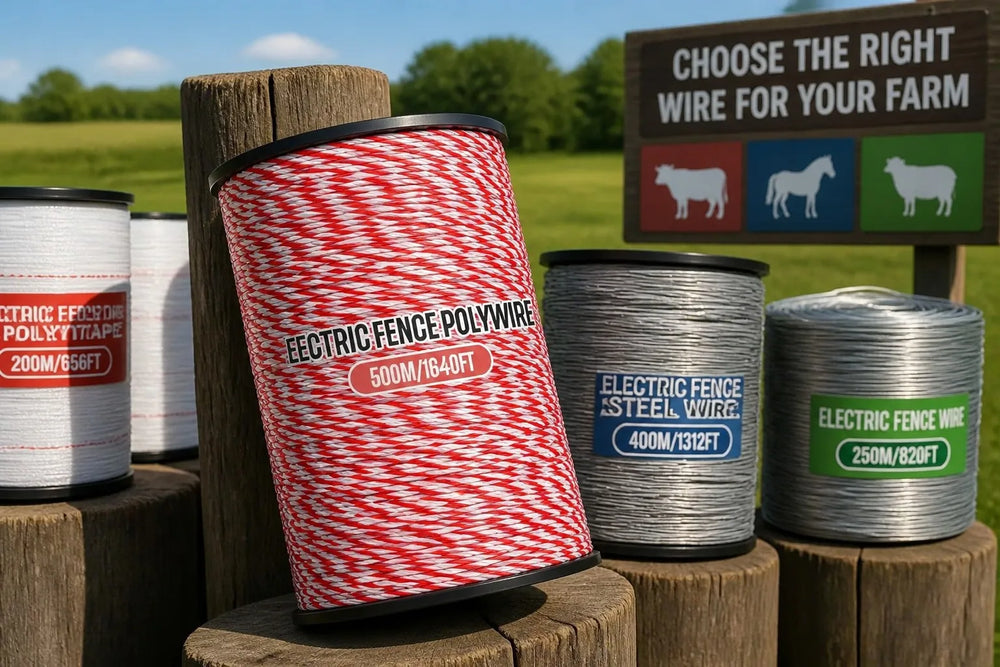
The LIFEALL Electric Fence Polywire 2mm – 200m/500m is a great choice for this application. Key specifications: 2mm polywire, high-visibility red & white, 200m/500m reels.
Different conductors offer different levels of conductivity, visibility, strength, and durability. Whether you are fencing cattle, horses, sheep, goats, or poultry, selecting the appropriate wire can improve fence performance, reduce maintenance, and keep your livestock safely contained.
1. Why Electric Fence Wire Matters
The fence wire carries the electrical pulse from the energizer throughout the entire fencing system.
If the conductor has poor conductivity or becomes damaged, voltage will drop and the fence will become less effective. A high-quality conductor helps maintain consistent voltage, reduces energy loss, and improves the overall performance of your electric fence.
Selecting the right wire is the foundation of a reliable fencing system.
2. Understand the Different Types of Electric Fence Wire
There are several types of conductors available, and each is designed for different farming applications.
The most common options include:
Polywire
Polyrope
Polytape
High tensile wire
Each type offers its own advantages depending on your livestock, fence length, and installation requirements.
3. When to Choose Polywire
Polywire is one of the most popular choices for temporary electric fencing.
It is lightweight, flexible, and easy to install, making it ideal for rotational grazing and portable fencing systems.
Polywire is recommended for:
Temporary paddocks
Cattle grazing
Sheep grazing
Strip grazing
Seasonal fencing
Because it is easy to rewind and relocate, polywire is widely used by farmers who frequently move their fence lines.
4. When to Choose Polyrope
Polyrope contains more conductive strands than polywire and is generally stronger.
Its larger diameter also makes it easier for livestock to see, reducing accidental contact with the fence.
Polyrope is commonly used for:
Horse fencing
Permanent livestock fencing
Long-distance fence lines
High-visibility applications
For larger animals, polyrope often provides an excellent balance between durability and visibility.
5. When to Choose Polytape
Polytape is designed to provide maximum visibility.
Its wide profile makes it highly noticeable, especially for horses, which rely heavily on visual boundaries.
Polytape is best suited for:
Horse paddocks
Equestrian facilities
Temporary horse fencing
High-visibility fence systems
Although polytape is easy for animals to see, it may experience more wind resistance than polywire or polyrope.
6. When to Use High Tensile Wire
High tensile wire is commonly used in permanent fencing installations.
It offers excellent conductivity, high strength, and a long service life.
High tensile wire is suitable for:
Permanent cattle fencing
Large ranches
Long perimeter fences
Heavy-duty livestock systems
Although installation requires more time and specialized tools, high tensile wire provides outstanding long-term durability.
7. Consider Conductivity and Fence Length
Not all fence wires conduct electricity equally.
As fence length increases, conductivity becomes more important.
For long fences, choose conductors with multiple stainless steel or copper strands to reduce resistance and maintain higher voltage throughout the system.
A properly matched conductor helps your electric fence energizer perform at its full potential.
8. Match the Wire to Your Livestock
Different animals require different fencing solutions.
General recommendations include:
Cattle — Polywire or high tensile wire
Horses — Polyrope or polytape
Sheep — Electric fence netting or polywire
Goats — Electric fence netting with a powerful energizer
Poultry — Electric fence netting
Choosing the right conductor improves both animal control and fence efficiency.
9. Don't Forget the Other Fence Components
Even the best conductor cannot perform well without a properly designed fencing system.
Make sure your installation includes:
A reliable electric fence energizer
High-quality fence posts
Durable insulators
A properly installed grounding system
Secure wire connectors
Every component contributes to maintaining consistent fence voltage.
10. Maintain Your Fence Wire for Long-Term Performance
Regular maintenance helps extend the life of your electric fence wire.
Inspect the fence routinely for:
Broken conductive strands
Loose connections
Excessive wire sagging
Weather damage
Vegetation touching the fence
Replacing damaged sections promptly helps maintain reliable voltage and reduces long-term repair costs.
Conclusion
The best electric fence wire depends on your livestock, fencing layout, and management goals. Polywire is ideal for temporary fencing, polyrope offers excellent strength and visibility, polytape is a popular choice for horses, and high tensile wire provides outstanding durability for permanent installations. Combined with a quality electric fence energizer, strong fence posts, and an effective grounding system, the right conductor will help you build a dependable fencing system that performs season after season. LIFEALL Fence offers a complete range of electric fencing products designed to meet the needs of modern livestock farms around the world.
FAQ
What is the best electric fence wire for cattle?
Polywire is ideal for temporary grazing systems, while high tensile wire is often preferred for permanent cattle fencing.
Is polyrope stronger than polywire?
Yes. Polyrope is generally stronger, contains more conductive strands, and offers better visibility for larger livestock.
Is polytape only used for horses?
Polytape is most commonly used for horses because it is highly visible, but it can also be used for other livestock where visibility is important.
Which fence wire conducts electricity the best?
High tensile wire usually provides the best conductivity, while premium polywire and polyrope with multiple conductive strands also deliver excellent electrical performance.
Recommended Products
LIFEALL Electric Fence Polywire 2mm – 200m/500m
2mm polywire, high-visibility red & white, 200m/500m reels
LIFEALL Electric Fence Jumper Lead Cables
Red & green crocodile clips, connect energizer to fence & ground
LIFEALL Electric Fence Ring Insulators Screw-in 50/100 Pcs
Screw-in, UV resistant, for wood posts, 50/100 pcs
Read article
 electric tape
1. Introduction: Why Fence Choice Matters
Choosing the right electric fence type is not just about budget—it directly affects livestock safety, grazing efficiency, and ease of management.
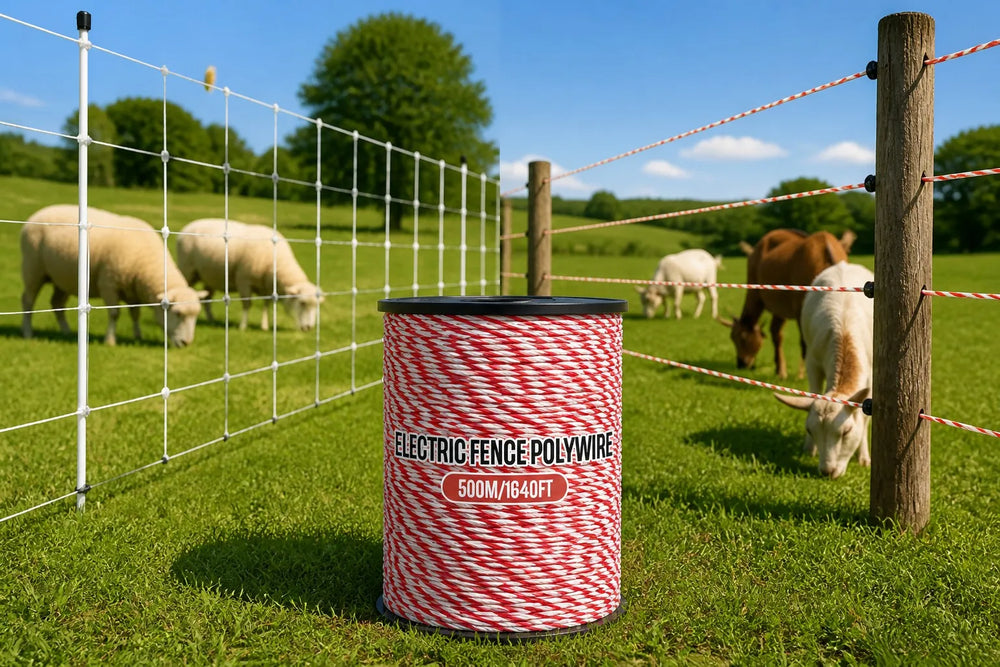
The LIFEALL Electric Fence Polywire 2mm – 200m/500m is a great choice for this application. Key specifications: 2mm polywire, high-visibility red & white, 200m/500m reels.
Two of the most common fencing solutions are electric fence netting and electric fence wire systems (including polywire, polyrope, and tape). Each has unique benefits depending on your animals and land setup.
2. What Is Electric Fence Netting?
Electric fence netting is a pre-fabricated mesh with conductive wires woven into vertical and horizontal lines, usually with step-in posts already attached. It’s designed for fast setup and secure containment.
✅ Best for: Poultry, goats, sheep, or areas with predator risks
Pros:
- Quick installation, minimal tools required
- Tight spacing prevents animals from slipping through
- Offers some predator protection
Cons:
- Heavier and harder to move
- More expensive per meter
- Difficult to repair if damaged
3. What Is Electric Fence Wire (Polywire, Polyrope, Tape)?
Wire-based fencing uses polywire, polyrope, or electric fence tape stretched between posts (plastic, fiberglass, pigtail, or metal). It’s widely used for rotational grazing and larger pastures.
✅ Best for: Cattle, horses, pigs, and goats
Pros:
- Lightweight and highly portable
- Cost-effective for long distances
- Easy to store, repair, and customize
- Works with a variety of post types
Cons:
- Requires reels and insulators
- Less effective against predators
- Needs proper tension to prevent sagging
4. Installation & Maintenance Comparison
Netting: Faster for small enclosures, but bulky to move or store; harder to untangle if rolled incorrectly.
Wire systems: Require more setup, but easier to repair, adjust, and extend over large areas.
5. Which Fence Works Best for Which Animals?
Animal
Recommended Fence
Why
Chickens
Netting
Prevents escape and deters ground predators
Sheep
Netting
Wool makes single wires less effective
Goats
Netting or multi-strand wire
Netting blocks escapes; wire works if set with multiple strands
Cattle
Polywire/Polyrope
Strong visual barrier, easy to move for grazing
Pigs
Low-strand polywire
Keeps them from rooting under the fence
Horses
Electric tape/rope
High visibility prevents accidents
6. Conclusion
There’s no single “best” electric fence—it depends on your animals, terrain, and management style.
Use netting for smaller animals and predator-sensitive areas.
Use polywire/rope/tape for larger animals and flexible grazing systems.
By choosing the right fencing method, you ensure safety, reduce labor, and improve efficiency on your farm. LIFEALL provides a wide range of products including high-quality polywire and energizers to support your choice.
Recommended Products
LIFEALL Electric Fence Polywire 2mm – 200m/500m
2mm polywire, high-visibility red & white, 200m/500m reels
LIFEALL 10KM Electric Fence Energizer with Battery Power Clip
10KM range, LCD display, battery power clip connector, cattle/sheep/poultry
LIFEALL Electric Fence Charger 12V Battery – 2 Joules 6 Miles
2 Joules, 6 miles / 40 acres, 12V battery, cattle/horse/pig
Read article
 battery care
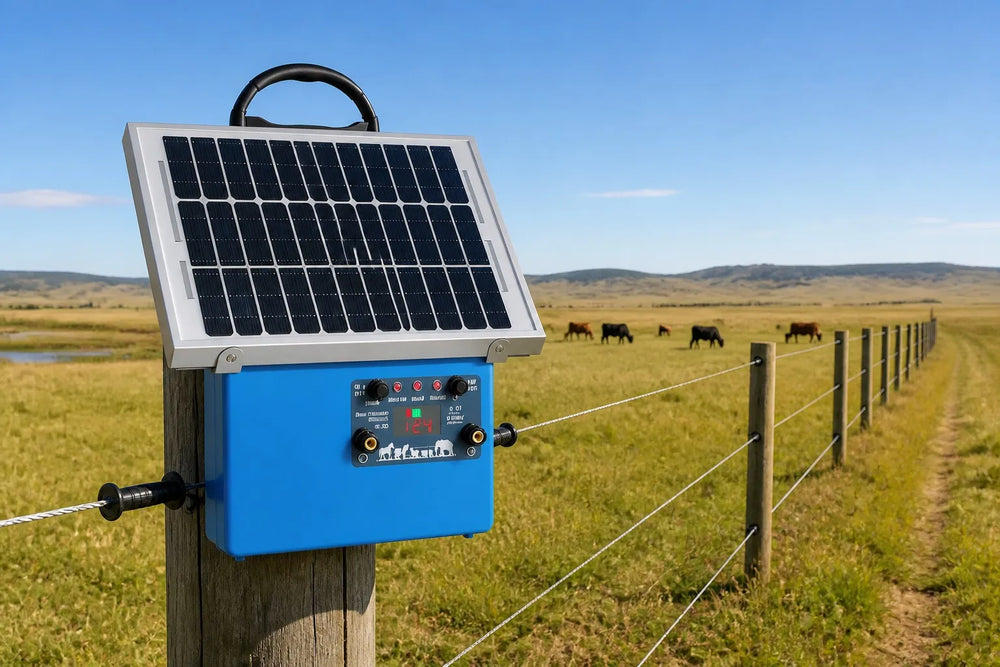
1. How a Solar Fence Energizer Works
A solar fence energizer converts sunlight into stored energy and releases it in controlled electrical pulses through your fence line.
The LIFEALL 20 Miles Solar Electric Fence Charger 0.5J is a great choice for this application. Key specifications: 20 miles, 0.5J, solar powered, off-grid controller for livestock.
A complete system includes:
Solar panel
Battery (usually 12V lead-acid or lithium)
Fence energizer unit
Fence conductor (polywire, polyrope, tape, or fence netting)
Grounding system
If any one of these components is neglected, overall fence performance will drop.
2. Keep the Solar Panel Clean and Unshaded
Solar panels are the most exposed part of the system and the easiest to overlook.
Best practices:
Clean dust, mud, or bird droppings every 2–4 weeks
Use water and a soft cloth only
Avoid abrasive cleaners
Make sure no grass, trees, or fencing materials shade the panel
Even partial shade can significantly reduce charging efficiency.
3. Check Battery Health Regularly
The battery stores energy for night use and cloudy days. Most solar fence failures start here.
Maintenance tips:
Inspect battery terminals for corrosion
Ensure tight connections
Test battery voltage periodically
Replace batteries that no longer hold charge
If your fence weakens after sunset, the battery is usually the cause.
4. Monitor Fence Voltage, Not Just the Energizer Light
Many solar energizers have indicator lights, but these do not tell the full story.
You should:
Use a digital fence tester
Measure voltage at the energizer output
Test again at the far end of the fence
Compare readings during day and night
Consistent voltage matters more than peak voltage.
5. Maintain a Proper Grounding System
Grounding is critical for solar energizers, especially in dry soil conditions.
Good grounding practices include:
Using galvanized grounding rods
Ensuring firm soil contact
Keeping connections clean and tight
Improving soil moisture during dry seasons
Poor grounding can make even a high-quality solar energizer feel weak.
6. Control Vegetation Along the Fence Line
Solar energizers are more sensitive to constant energy drain caused by vegetation.
Pay special attention to:
Grass touching lower fence wires
Weeds contacting electric fence netting
Fast-growing pasture during rainy seasons
Regular trimming helps maintain stable voltage and reduces battery load.
7. Inspect Fence Conductors and Connections
Fence conductors affect how efficiently energy travels.
Routine checks should include:
Tight knots and clips on polywire and polyrope
Proper tension on electric fence tape
Clean stainless-steel contacts on netting
No broken or rusted connectors
Small connection problems can cause large voltage losses.
8. Posts and Insulators Also Need Attention
Fence posts and insulators protect electricity from leaking into the ground.
Check for:
Cracked insulators on metal posts
UV-damaged plastic posts
Loose fence lines rubbing against posts
Even a strong solar energizer cannot overcome poor insulation.
9. Adjust Maintenance by Season
Solar fence systems behave differently throughout the year.
Seasonal tips:
Winter: clean panels more often, monitor battery capacity
Spring: control fast vegetation growth
Summer: ensure full sun exposure, prevent overheating
Rainy seasons: check grounding and waterlogged areas
Season-specific care prevents sudden fence failures.
10. Know When the System Needs an Upgrade
Sometimes maintenance reveals that your fence system has grown beyond its original design.
This may happen if:
Fence length increases
Fence netting is added to wire systems
More animals are enclosed
Additional fence lines are connected
In these cases, upgrading to a higher-capacity solar energizer is a better solution than pushing a small unit too hard.
Final Thoughts
A solar fence energizer is not a “set it and forget it” device. With simple, regular maintenance, it can deliver reliable performance for many years—even in challenging farm environments.
When the solar panel, battery, grounding system, fence conductors, and posts work together, your electric fence stays strong day and night.
LIFEALL designs solar fence energizers to work with polywire, tape, fence netting, and common fence posts—making long-term maintenance easier for modern farms.
Recommended Products
LIFEALL 20 Miles Solar Electric Fence Charger 0.5J
20 miles, 0.5J, solar powered, off-grid controller for livestock
LIFEALL Electric Fence Voltage Tester – 8-Level LED
8-level LED, 600V to 12000V, works with all energizer types
Read article



 electric fence netting


