

How Many Strands? 7 Rules for Building an Effective Electric Fence
The Short Answer
Farmers and ranchers constantly ask how many strands of electric fence wire they need. The answer may surprise you: the number of strands matters far less than the location and spacing of the electrified wires. Get the heights right and even a single wire can hold a trained herd; get them wrong and a six-strand fence will leak animals.
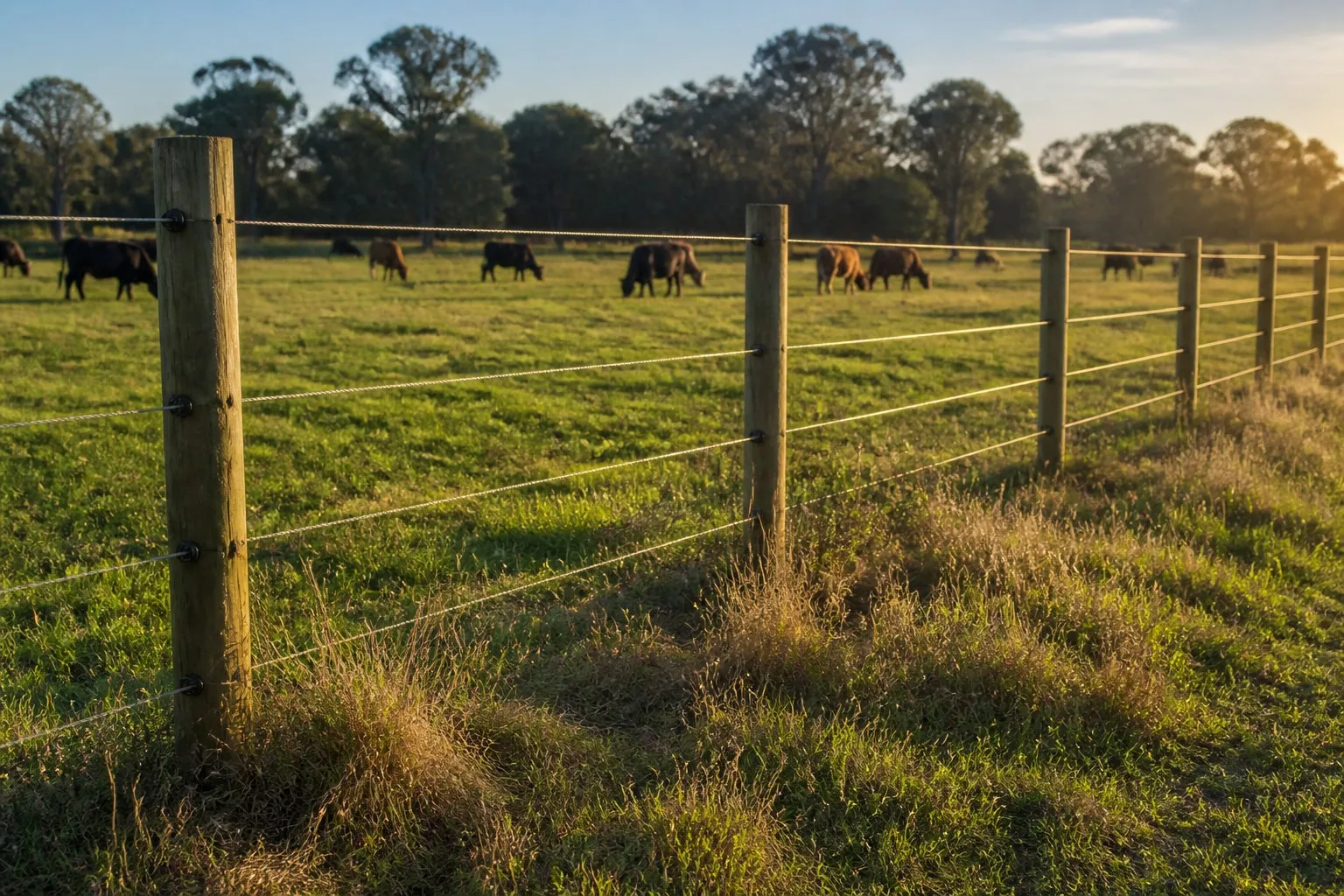
Rule 1 — Know the Nose
Every electric fence needs at least one hot wire set at the nose height of the animals you want to control — the level of the animal's nose as it walks toward the fence. The goal is to shock the animal in front of its eyes so it backs away. If an animal gets its head through and takes the shock behind the eyes — on the back of the head or shoulder — it triggers a flight response, and the animal runs forward, often straight through the fence.
Rule 2 — Plan for the Kids
If the same fence pens animals of different sizes, you need a nose-level strand for each. A classic example: calves and full-grown cattle in one pasture. Set one strand at adult nose height and another at calf nose height. A strand at a young animal's nose height teaches it, in one memorable lesson, to respect the fence for life.
Rule 3 — Prepare for Grazing
Besides the walking strand, add a hot wire at grazing height — near the ground, where an animal's head is when it eats. Livestock love to graze right along the fence border chasing fresh growth, and without a charged grazing line they push physical stress into posts and lower wires.
Rule 4 — Teach Them a Lesson
Animals that are trained to the fence usually need fewer hot wires — for many temporary interior paddocks, one line is enough. Dairy cattle, which get regular human contact and a daily routine, learn particularly fast. Young animals are harder to control and need more wires. For horses, deliberate fence training works better than letting them find out on their own; either way, most animals find the touch so jarring they don't test it twice.
Rule 5 — Keep a Head in Mind
Measure the height of one animal's head — from the top to the bottom. That distance is your ideal vertical spacing between hot wires. If an animal can't fit its head between wires, it can't breach the fence. Combined with Rule 1, this is the anatomy-based secret of electric fencing: shock from nose to eyes and the animal backs away; shock behind the eyes and it runs forward.
Rule 6 — Know What's Outside
Electric fences can do two jobs: keep livestock in, and keep predators out. Most farmers build for the first and forget the second. To deter predators, add hot wires very close to the ground (diggers like coyotes and raccoons will go under a fence), and tighten the spacing between the other wires — adding a line between each head-height set is a good guide. See our predator fencing guide for coyote, bear and fox setups.
Rule 7 — Be Flexible
Installing electric fencing is an art more than a science. Terrain, water sources, trees, dislodged posts and snapped lines will all test your plan. Keep a fence tester, spare insulators and a length of spare line on hand, and troubleshoot until it all comes together. A flexible installer is the difference between a fence that works and a fence that's always broken.
Putting the Rules Together
Start from the animal: nose strand, grazing strand, head-spacing between them, then predator wires at ground level if needed. Train the animals, test the line at the far end, and adapt as conditions change. For the height and spacing figures by species, our fence height guide covers cattle, goats and poultry in one place.